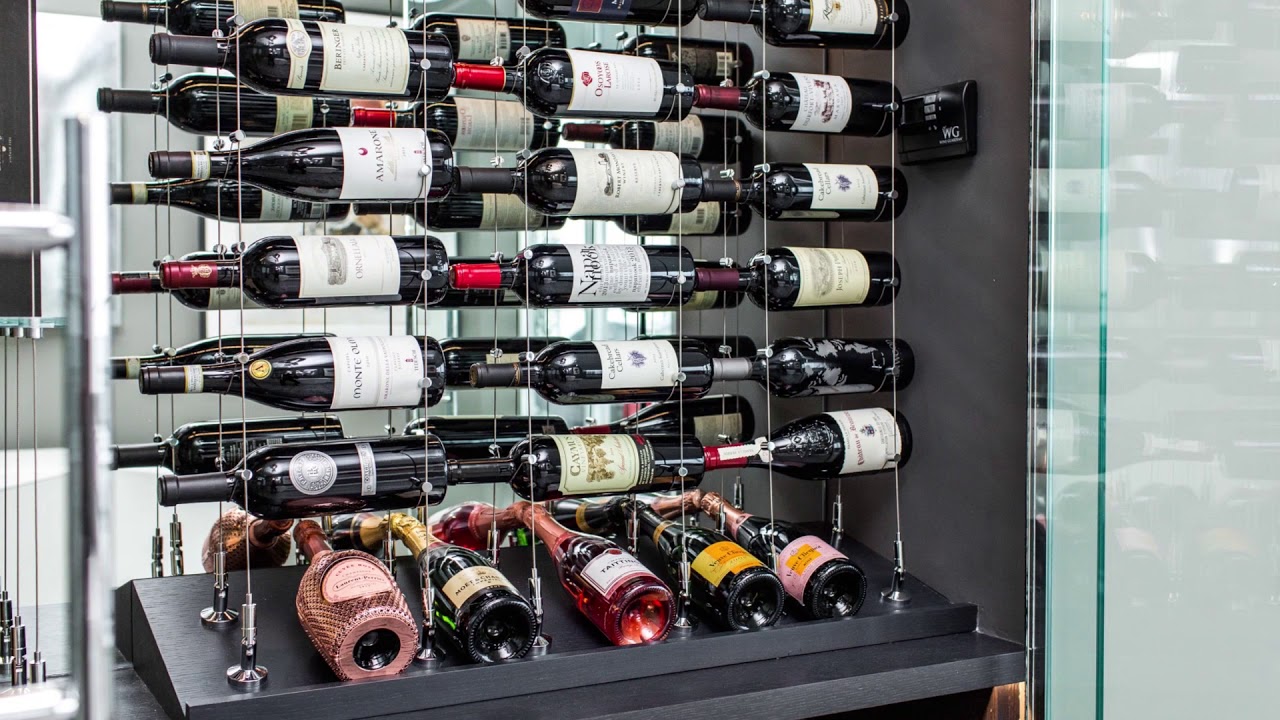
One of the biggest advantages of a cable wine rack is that every bottle faces forward. Labels are visible at a glance, which means the way you organize your collection becomes part of the display itself. A thoughtful arrangement makes it easy to find what you’re looking for and makes the wall look intentional. Here’s how to approach it.
Why Labels-Forward Changes Everything
Traditional horizontal racking — the kind built into most wood cellars — stores bottles with the label facing up or to the side. You’re essentially looking at the bottom of a bottle, which tells you nothing. Finding a specific wine means pulling bottles out and putting them back, which disturbs sediment and disrupts the display.
A labels-forward system flips that entirely. Every bottle is a data point you can read from across the room. With the right organization system, you can scan your entire collection in seconds, spot gaps, and pull exactly what you want without touching anything else.
Start by Taking Stock
Before you arrange anything, know what you have. Pull everything out and group bottles by type — reds together, whites together, sparkling separate. Within those groups, sort by region or producer. This exercise often turns up surprises: bottles you forgot you had, duplicates, or gaps in the collection you’ll want to fill.
If you don’t already catalog your wine digitally, now is a good time to start. Apps like Vivino or Cellartracker let you log each bottle, track drinking windows, and note tasting impressions. A digital catalog paired with a labels-forward display is the most functional setup you can have — you always know what’s on the wall and when to drink it.
Choose an Organization Method
There’s no single right way to organize a wine collection. The best method depends on how you shop for wine and how you like to drink it. Here are the most common approaches:
By region. This is the classic collector’s approach. Group bottles by country and region — Burgundy together, Napa Cabernets together, Rhône together, and so on. It’s intuitive if you think about wine geographically and makes it easy to find a specific bottle when you know where it’s from. On a labels-forward display, regional groupings also look cohesive because labels from the same region tend to share a visual language.
By variety. Organize by grape instead of geography — all Pinot Noir in one section regardless of whether it’s from Oregon, Burgundy, or New Zealand. This works well if you tend to choose wine by what you’re in the mood for rather than where it’s from.
By occasion or use. Some collectors organize around how they drink — everyday bottles in one section, special occasion wines in another, wines for aging in a third. This is less about geography or grape and more about function. It’s practical, especially if you entertain regularly and want to grab a bottle quickly without deliberating.
By drinking window. Group wines by when they should be consumed — drink now, drink within two to five years, hold for five or more years. This works best as a secondary organizational layer rather than the primary one, and it requires keeping your catalog up to date as windows shift.
For most collectors, a combination works best: primary organization by region or variety, with a dedicated section for special bottles and another for everyday drinking.
Map Your Wall Before You Load It
A labels-forward display is a fixed arrangement — bottles aren’t getting shuffled the way they might in a bin or case stack. So it’s worth mapping your wall on paper before you start loading.
Sketch out your rack columns and rows and assign sections to each category. Think about visual balance: heavier categories get more columns, lighter ones fewer. Put your most-reached-for bottles at eye level where they’re easiest to grab. Reserve the top rows for wines you’re aging and won’t touch for a while.
If you have presentation shelves integrated into the display, plan what goes on them now. A magnum of something special, a bottle with a beautiful label, or a wine that tells a story about your collection — these are the bottles that belong at eye level on a shelf where they can be appreciated.
Use the Wall to Tell a Story
A well-organized labels-forward display isn’t just functional — it’s a reflection of your palate and your collecting history. Think about the visual narrative when someone looks at the wall. Bottles from a meaningful trip, a vertical of a producer you’ve followed for years, a corner dedicated to natural wines — these groupings give the display personality beyond pure organization.
Consistent spacing between bottles matters here too. Even if different sections hold different wines, keeping row and column spacing uniform across the wall ties everything together visually. The organization creates the logic; the spacing creates the aesthetic.
Leave Room to Grow
One of the easiest mistakes to make when loading a new display is filling every slot immediately. Leave intentional gaps — roughly 15–20% of capacity — so you have room to add bottles without reorganizing the entire wall every time you come home from a wine shop. Gaps also give the display breathing room that looks considered rather than crammed.
If your collection is still growing in a particular direction — a new region you’re exploring, a producer you’re building a vertical of — leave an obvious open section for it so additions slot in naturally.
Maintain It Over Time
A labels-forward display only works as well as the organization behind it. Set aside time every few months to do a quick audit: pull bottles that are past their drinking window, note what you’ve consumed and what you’ve added, and adjust sections if your collecting habits have shifted. Treat it the way you’d treat any curated space in your home — a little regular attention keeps it looking and functioning its best.
The Bottom Line
Labels-forward storage is only as good as the system behind it. With a clear organization method, a mapped-out layout, and a little room to grow, your cable wine rack becomes more than a display — it becomes a working tool that makes your collection more enjoyable every day.
Need expert advice? Contact us today for a free consultation and custom recommendations.