
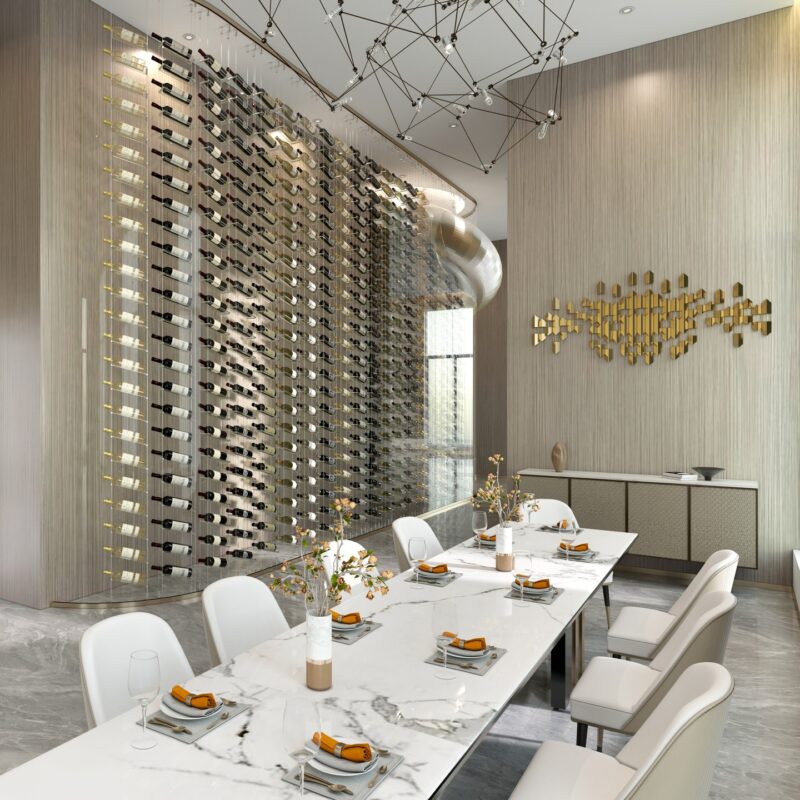
Building a wine cellar today is no longer just about stacking bottles in a cool room. Modern wine cellars are architectural features—often glass-enclosed, design-forward, and fully integrated into luxury homes, restaurants, and hospitality spaces.
For contractors and builders, success comes down to understanding the three pillars of wine cellar construction: structure, environment, and display. Miss one, and the entire project can fail—sometimes after the homeowner has already filled it with wine.
Here’s what every contractor should know before building a high-performance, modern wine cellar.
1. Start with the Right Location
A wine cellar should be planned early in the construction process. While basements are still common, many modern projects place wine displays in:
- Living rooms
- Dining areas
- Hallways
- Stairwells
- Restaurants and hospitality spaces
When choosing a location, consider:
- Proximity to mechanical space for cooling
- Ceiling height (especially for floor-to-ceiling cable systems)
- Wall structure and backing requirements
- Sun exposure and adjacent heat sources
Glass wine cellars and open displays look incredible—but they require tighter coordination between trades to function properly.
2. Build the Envelope Like a Refrigerator
A wine cellar is essentially a temperature-controlled enclosure. To work properly, it must be sealed and insulated correctly.
Key construction requirements include:
- Closed-cell insulation in walls and ceilings
- A continuous vapor barrier on the warm side of the room
- Airtight construction around doors, glass, and penetrations
This is especially critical for glass-heavy wine cellars. While cable wine racking creates a floating, open look, the room itself still needs to perform like a sealed environment.
Poor insulation or air gaps lead to:
- Mold and moisture issues
- Condensation on glass
- Overworked cooling units
3. Coordinate Cooling Early (Not After the Fact)
One of the most common mistakes is treating wine cooling as an afterthought.
Wine cellar cooling systems are specialized and must be selected based on:
- Room size and insulation values
- Glass surface area
- Bottle count and racking layout
- Supply and return air placement
Contractors should coordinate early with the wine cellar specialist and HVAC team to determine:
- Ducted vs. split vs. self-contained systems
- Vent placement that won’t interfere with racking
- Drainage and condensation management
A beautifully built wine cellar can fail if airflow is blocked by racking—or if the system is oversized, undersized, or installed incorrectly.
4. Choose the Right Wine Racking System
Today’s homeowners and designers want wine displays that feel light, modern, and architectural. Cable wine racking systems have become a go-to solution because they offer:
- Label-forward bottle presentation
- Floor-to-ceiling designs
- Minimal visual obstruction
- Compatibility with glass enclosures
However, cable systems require:
- Proper structural backing
- Accurate floor-to-ceiling measurements
- Coordination with glass door swing and hardware
- Planning for LED lighting and electrical pathways
The biggest advantage for contractors? Cable systems are modular, adaptable, and far more forgiving when design changes occur late in the project.
5. Plan for Lighting—Before Walls Close
LED lighting transforms a wine cellar from storage into a showpiece. But lighting must be planned early to avoid last-minute compromises.
Best practices include:
- Low-heat, low-voltage LED strips
- Lighting positioned to avoid direct heat on bottles
- Concealed wiring paths within framing or ceilings
- Coordination with racking layout
Integrated lighting works especially well with cable wine systems, enhancing depth and highlighting bottles without cluttering the design.
6. Glass Matters More Than You Think
Modern wine cellars often rely heavily on glass—and not all glass is created equal.
Wine cellar glass should be:
- Dual-pane or thermally insulated
- Properly sealed within the framing system
- Sized to accommodate door swing and pressure changes
Contractors should work closely with both the glass vendor and wine cellar designer to ensure the enclosure meets thermal requirements without compromising aesthetics.
7. Installation Timing Is Everything
Wine racking should only be installed after:
- Flooring is complete
- Walls are finished and painted
- Glass openings are finalized
- Cooling rough-ins are complete
Rushing installation leads to rework, delays, and alignment issues—especially with floor-to-ceiling cable systems where precision matters.
Build It Right the First Time
A well-built wine cellar adds real value to a project—but only when structure, cooling, and racking work together as one system.
At Cable Wine Cellars, we specialize in modern, architectural wine racking solutions designed to integrate seamlessly with today’s construction methods. We work directly with contractors, builders, designers, and HVAC professionals to ensure every wine cellar looks stunning—and performs flawlessly.
Planning a wine cellar project?
Involve your wine racking and cooling partners early, and build it right the first time.
📞Contact us today to get started on your luxurious wine cellar!